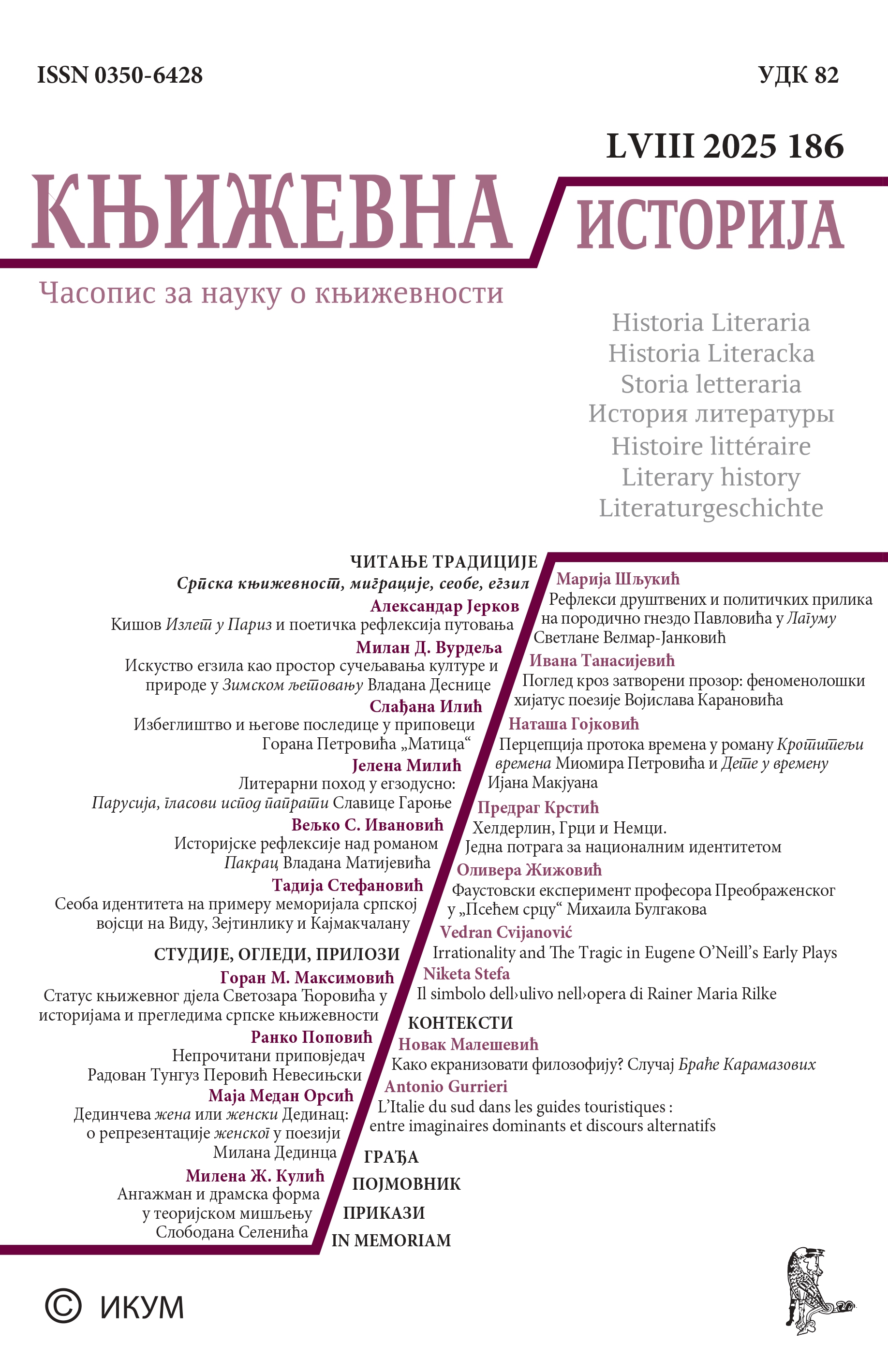
Фаустовски експеримент професора Преображенског у „Псећем срцу“ Михаила Булгакова
Сажетак
Полазећи од самоодређења Михаила Булгакова који је себе видео као „мистичног писца“, превасходно заинтересованог за мрачне аспекте човека и страшне црте сопственог народа, у раду се разматрају дубљи, мистични слојеви Булгаковљеве сатирично-алегоријске приповетке „Псеће срце“, те њене „мрачне боје“. Истраживање је усмерено на противречну и амбивалентну природу главног јунака, Филипа Филиповича Преображенског, и његов научни, квазимагично-религиозни експеримент, уз истицање кључних подударања, али и једне важне разлике између ове Булгаковљеве приповетке и Гетеовог Фауста.
Други део рада посвећен је метафорично-психолошком читању „Псећег срца“, уместо дословног или алегоријског, које отвара могућност сагледавања демонског као дела душе главног јунака, а Шарика/ Шарикова као отеловљења тамне, мрачне, демонске стране професора Преображенског, али и руске интелигенције, односно њене научне елите.
Референце
Акимов, Владимир. Свет правды художника. Перечитывая Михаила Булгакова: размышления, наблюдения, полемика. Санкт Петербург: Ладога; Фонд им. Ю. Слепухина, 2008.
Библија. Свето писмо Старога и Новога завјета. Превели Ђура Даничић (СЗ) и Вук Стеф. Караџић (НЗ). Београд: Издање Британског и иностраног библијскога друштва, 1966.
Булгаков, Михаил. „Дьяволиада; Роковые яйца; Собачье сердце; Рассказы; Фельетоны“. Собрание сочинений в пяти томах: том 2. Москва: Художественная литература, 1989, 119–208.
Булгаков, Михаил. „Псеће срце“. Псеће срце. Прев. Миливоје Јовановић. Београд: Нолит, 1971, 190–306.
Гаспаров, Борис. „Новый завет в произведениях М. А. Булгакова“. Литературные лейтмотивы. Очерки по русской литературе XX века. Москва: Наука; Издательская фирма Восточная литература, 1993, 83–123.
Гете, Јохан Волфганг. Фауст. Прев. Бранимир Живојиновић. Подгорица: Цид, 1997.
Гисланцони, Антонио. Либретто оперы Дж. Верди Аида. 1870. Дирижер Туллио Серафин. Ла Скала, 1955. https://libretto-oper.ru/verdi/aida
Ермолинский, Сергей. „Из Записок разных лет. Михаил Булгаков. Николай Заболоцкий“. Москва: Искусство, 1990. https://m-bulgakov.ru/publikacii/iz-zapisok-raznih-let-mihail-bulgakov-nikolay-zabolockiy/p2).
Павлов, Юрий. „Два мира Михаила Булгакова“. Журнал русской культуры, 6. Москва: Союз писателей России, Российский фонд мира, 2003, 195–204. https://www.rospisatel.ru/pavlov-bulgakov.htm
Рыжкова, Татьяна. Диалоги с Булгаковым. Санкт-Петербург: Издательство САГА, Азбука-классика, 2005.
Садыхова, Севиндж. Творчество М. Булгакова – сатирика. Баку: Адильоглу, 2007.
Савина, Елена. Мистические мотивы в прозе М. А. Булгакова. Диссертация. Москва: „Московский городской педагогический университет“, 2005. Работа выполнена в государственном образовательном учреждении высшего профессионального образования „Московский городской педагогический университет“ на кафедре русской литературы XX века филологического факультета.
https://m-bulgakov.ru/publikacii/misticheskie-motivi-v-proze-bulgakova
Худзиньска-Паркосадзе, Анна. Фантастические повести Михаила Булгакова как зеркало эпохи (Дьяволиада, Роковые яйца, Собачье сердце), 2005. http://bulgakov.lit-info.ru/bulgakov/kritika/hudzinska-parkosadze-fantasticheskie-povesti.htm
Яблоков, Евгений. „Беспокойное Собачье сердце, или горькие плоды легкого чтения“. Oктябрь, 3, 2010. https://magazines.gorky.media/october/2010/3/ bespokojnoe-sobache-serdcze-ili-gorkie-plody-legkogo-chteniya. html
Яблоков, Евгений. „Homo Creator – Homo Faber – Homo Spectator (тема „мастерства“ у А. Платонова и М. Булгакова)“. Russian Literature, 46, 2, 1999. Amsterdam. http://www.eajablokov.ru/article17.html
Bulgakov, Mihail. Dnevnik Majstora i Margarite: sa pismima Majstora. Prev. Nada Uzelac. Beograd: Bukefal E.O.N., 2012.
Burgin, Diana. “Bulgakov’s early tragedy of the scientist-Creator: an interpretation of The Heart of a Dog”. The Slavic and East European Journal, 22 (4), 1978, 494–508.
Howell, Yvonne. “Eugenics, rejuvenation, and Bulgakov’s journey into the Heart of Dogness”. Slavic Review, 65 (3), 2006, 544–562.
Krementsov, Nikolai. Revolutionary Experiments: The Quest for Immortality in Bolshevik Science and Fiction. Oxford – New York: Oxford University Press, 2014.
Laursen, Eric. “Bad words are not allowed!: language and transformation in Mikhail Bulgakov’s Heart of a Dog”. The Slavic and East European Journal, 51 (3), (Fall), 2007, 491–513.
Mondry, Hanrietta. Political Animals: Representing Dogs in Modern Russian Culture. Leiden – Boston: Brill Rodopi, 2015.
Moulton, Richard Green. World Literature (Versions of the Story of Faust). New York: The Macmillan Company, 1911.
Natov, Nadine. “The meaning of music and musical images in the works of Mikhail Bulgakov”. Bulgakov: the Novelist-Playwright. Ed. Lesley Milne. Taylor & Francis e-Library (Routledge), 2005, 175–188.
Szarycz, Ireneusz. “The spiritual, cultural and political in Mikhail Bulgakov’s tale Собаче сердце”. Slavia Orientalis, LXI (1), 2012, 65–80.
Vuletić, Ivana. „Tema Fausta u Bulgakovljevom romanu Majstor i Margarita“. Književna kritika, 5, 1981, 70–81.
Žižović, Olivera. „Preobražaj, (r)evolucija i identitet u Psećem srcu Mihaila Bulgakova“. Izlaganje na Trinaestom međunarodnom interdisciplinarnom simpozijumu Susret kultura. Novi Sad: Filozofski fakultet, 2024 [u pripremi za štampu].
Сва права задржана (c) 2025 Olivera Žižović

Овај рад је под Creative Commons Aуторство-Nекомерцијално-Без прераде 4.0 Интернационална лиценца.
Аутори који објављују у часопису сагласни су са следећим условима:
- Аутори задржавају своја ауторска права и додељују часопису ексклузивно право првог објављивања научног рада који је истовремено лиценциран под Creative Commons Attribution-NonCommercial-NoDerivatives 4.0 International (CC BY-NC-ND 4.0), што омогућава другима да деле ту интелектуалну својину искључиво у научноистраживачке сврхе уз одговарајуће цитирање на аутора и часопис.
- Аутори имају права да деле своје радове у одговарајућим институционалним репозиторијумима, као и да их накнадно објављују прерађене и уз дораду, али уз обавезну потврду Књижевне историје и напомену о првом објављивању у овом часопису.
- Ауторима је дозвољено, чак се и подстичу да деле радове вирално (нпр. на друштвеним мрежама попут ResearchGate или Academia), што може довести до продуктивне размене научних информација, као и до веће видљивости и цититираности аутора и часописа. (Погледајте The Effect of Open Access).